

23.09.2026
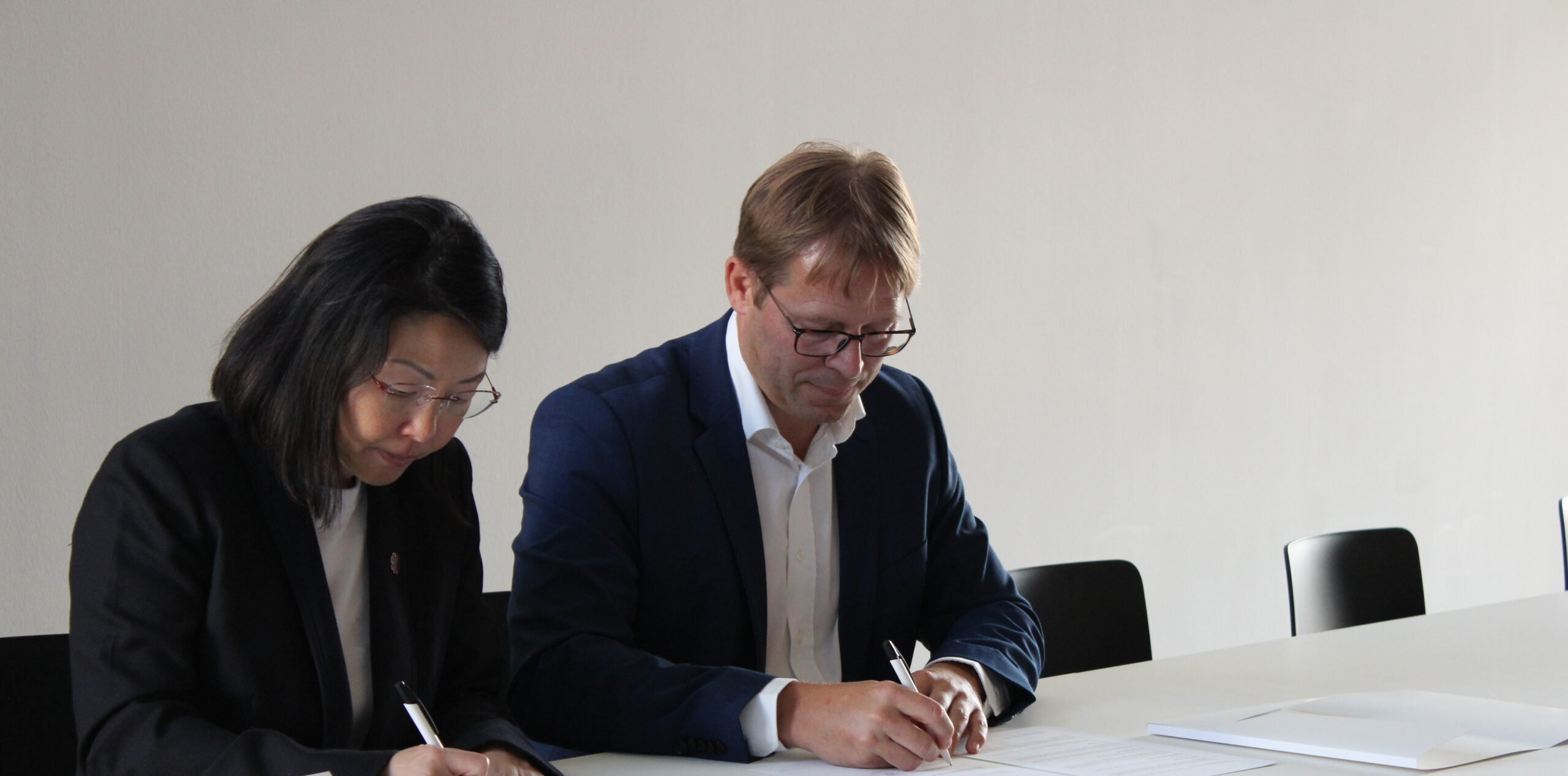
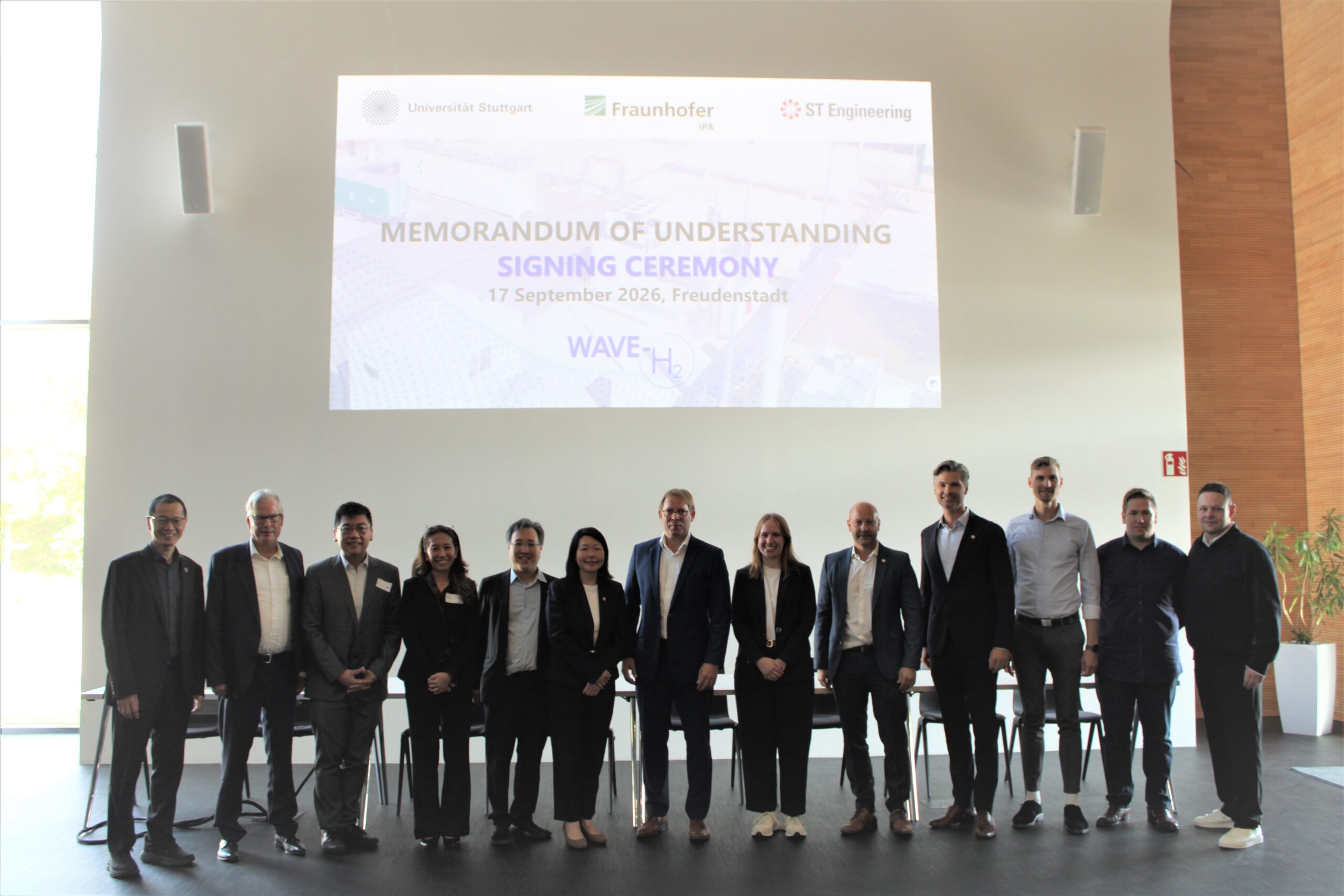
The Institute for Energy Efficiency in Production (EEP) at the University of Stuttgart and ST Engineering, a Singapore-headquartered global technology, defense and engineering group, signed a Memorandum of Understanding (MoU) on 17 September 2026. The partnership brings together complementary expertise in key areas of research and technology, with the aim of jointly developing and advancing innovative solutions for industrial applications.
The MoU establishes a framework for long-term international collaboration in research and innovation between EEP and ST Engineering. During the same meeting, ST Engineering also signed an MoU with the Fraunhofer Institute for Manufacturing Engineering and Automation IPA, strengthening its collaboration with another research partner in Stuttgart.
The partnership combines EEP’s scientific expertise with ST Engineering’s technological capabilities and experience in translating research into industrial applications.
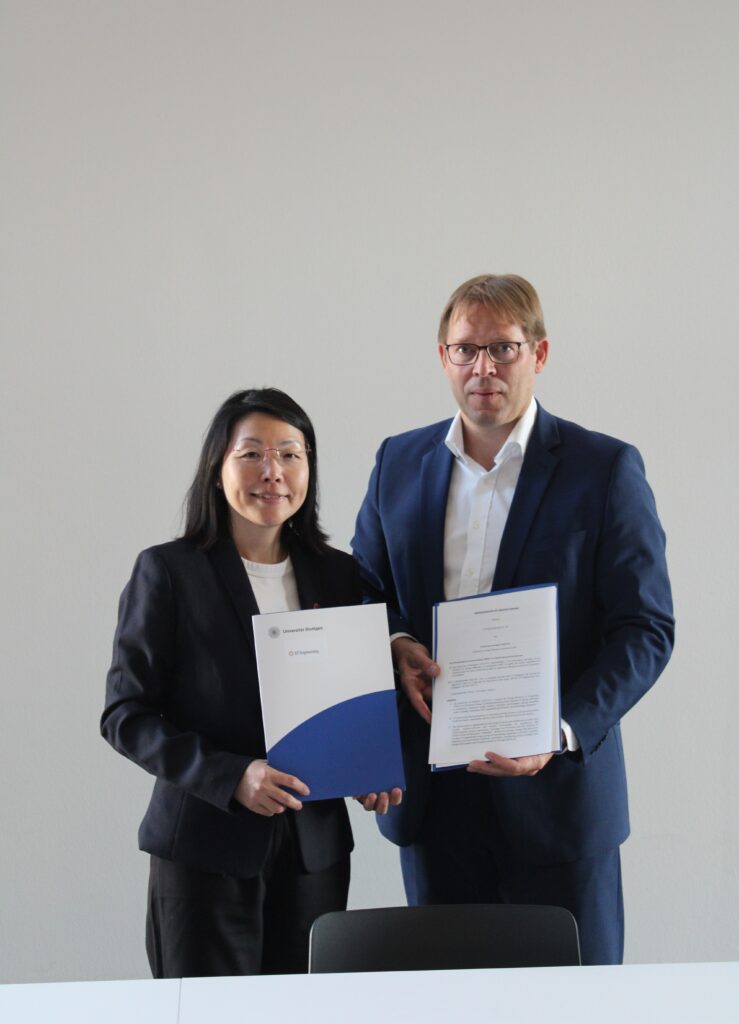
ST Engineering (left), and Prof. Alexander Sauer, Director of EEP, University of
Stuttgart (right).
Advancing research in emerging technology areas
A key area of collaboration is AI – the integration of artificial intelligence with physical systems, including robots and autonomous systems. Physical AI is also a strategic research priority for ST Engineering.
The partnership will enable the organizations to combine their expertise and research infrastructure, initiate joint research and development activities, and investigate new technological approaches in environments that closely reflect industrial applications.
“The technological challenges facing industry increasingly require international collaboration and complementary expertise. Together with ST Engineering, we aim to accelerate the transfer of emerging technologies from research into industrial practice and contribute to shaping the future of manufacturing,” says Prof. Alexander Sauer, Director of EEP.
“This collaboration reflects our shared belief that the convergence of emerging technologies can sustainably strengthen industry competitiveness. By bringing together expertise in areas such as artificial intelligence and cybersecurity, we can accelerate the development of innovative industrial solutions, including more secure and resilient energy systems. Through the university’s WAVE-H2 platform, we can validate these innovations for real-world applications,” says Cheryl Chan, Group Strategy & Sustainability Officer, ST Engineering.
WAVE-H2: A platform for research and technology transfer
The University of Stuttgart’s WAVE-H2 research platform will provide important research infrastructure for the collaboration. Developed by the Institute for Energy Efficiency in Production (EEP) and the Institute for Photovoltaics (ipv), WAVE-H2 comprises two sites in Stuttgart-Vaihingen and Freudenstadt.
The innovation modules in Stuttgart support research and development in areas including fuel cells, electrolyzers and chemical energy storage. At the Freudenstadt site, technologies and systems can be investigated on an industrial scale. Together, the two sites cover key stages of the hydrogen value chain – from production and storage to conversion and the use of hydrogen in industrial applications.
WAVE-H2 provides a research environment in which innovative technologies and solutions can be tested, validated and further developed under conditions that closely reflect industrial practice, making it particularly relevant to the collaboration with ST Engineering.
International collaboration for the future of manufacturing
Through the MoU, the University of Stuttgart and ST Engineering aim to expand opportunities for international knowledge and technology transfer. By combining scientific expertise, advanced research infrastructure and industrial capabilities, the partners intend to develop new solutions in the agreed research areas and support their transition into industrial applications.
The partnership also strengthens EEP’s international research network and provides a foundation for future joint research and development projects with ST Engineering.