

WAVE-H2 CAMPUS Freudenstadt
The Integration Platform
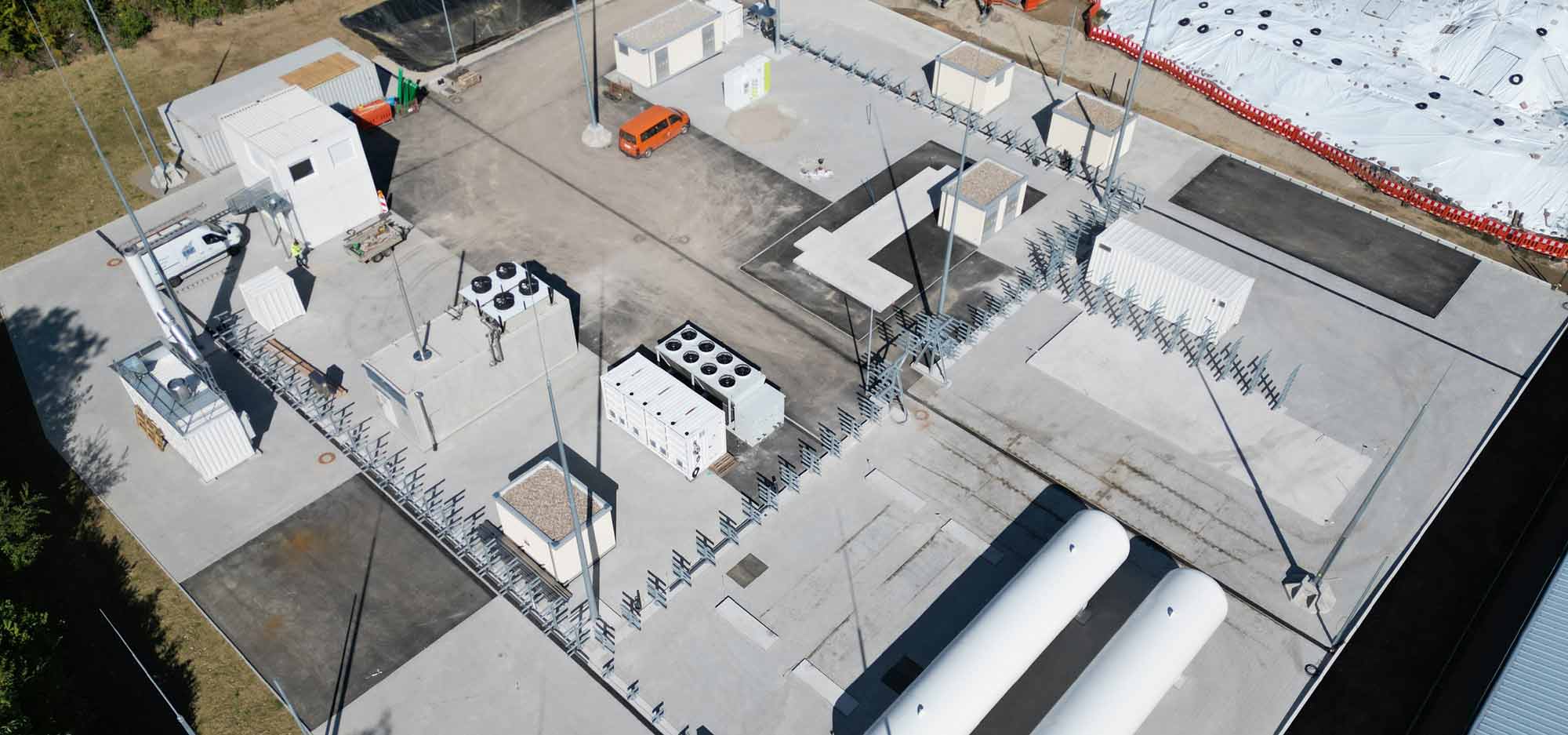
WAVE-H2 Campus Freudenstadt
The Integration Platform
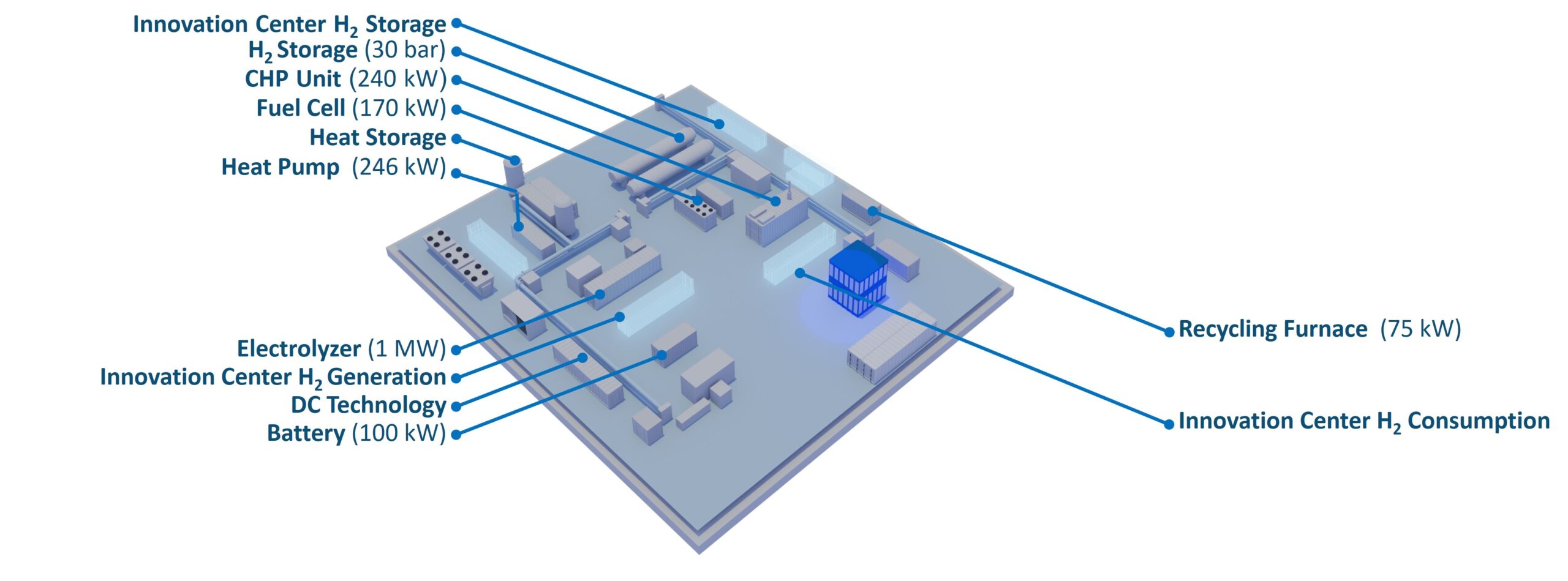

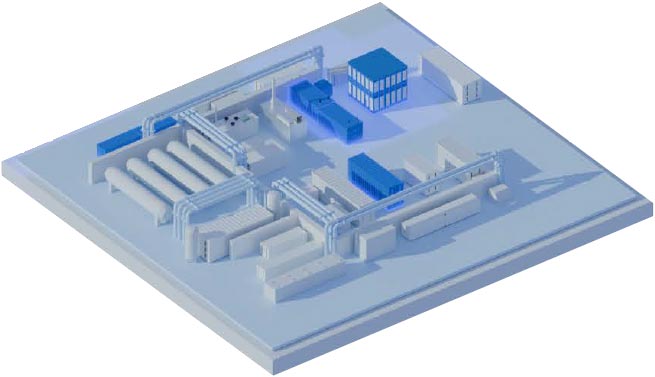
Battery
In modern energy systems, energy storage plays a key role in enabling the energy transition. The WAVE-H2 platform therefore integrates a range of storage technologies for the different energy carriers used on site. A lithium-ion battery system is used for electrical energy storage. It supports a range of functions within the power system, including storing low-cost energy, shifting peak loads, and stabilizing the grid. It also allows renewable energy generation to be decoupled from immediate consumption. These and other use cases can be implemented and tested on the platform. The battery system has a capacity of 100 kWh and can charge or discharge at up to 100 kW. It is initially connected to the platform’s low-voltage AC grid. Within the platform, the battery system plays a central role in energy management, particularly as it connects and balances multiple energy carriers.
Fuel cell
A PEM fuel cell converts hydrogen into electricity and heat, offering a climate-friendly alternative to conventional energy sources. It supports sustainable energy systems by adapting to changing energy demand. Integration into DC grids is being explored to reduce conversion losses and improve overall efficiency. This makes it a key component in resilient, climate-neutral energy systems.
Digital twins
Digital twins simulate the behavior of real systems in a virtual environment using real-time data. They enable testing of operating strategies, optimization of control systems, and analysis of degradation processes without impacting the physical system. By combining advanced sensor technology with machine learning, we improve system efficiency and validate results on real systems, supporting the development of sustainable and reliable energy systems.
H2 storage
Hydrogen storage is a central component of the WAVE-H2 system. It stores compressed hydrogen at 30 bar in a low-pressure gas system and enables flexible buffering of hydrogen produced by electrolysis using surplus renewable electricity.
The system consists of two stainless steel tanks with a capacity of 90 m³ each. They store hydrogen and supply it on demand for power generation or industrial applications, supporting system stability and security of supply.
The storage system features a robust design, high efficiency, and a long service life. Its modular concept allows flexible integration into different energy systems and seamless coupling with electrolyzers and various applications. This supports the efficient use of renewable energy, reduces grid load, and contributes to a sustainable, low-carbon energy supply. The system provides a solid foundation for the energy transition and the development of hydrogen technologies.
Innovation center H2 storage
To ensure flexibility, the platform includes dedicated innovation centers for integrating new research systems. Each center is equipped with the required infrastructure and is already approved for defined capacity limits. This allows new technologies to be integrated quickly and tested within the overall system.
The hydrogen storage innovation center offers an electrical connection capacity of 500 kVA, a maximum thermal output of 250 kW at temperatures of up to 100 °C, and a hydrogen connection of up to 36 kg/h. It also includes compressed air and nitrogen connections.
Recycling furnace
The recycling furnace can melt aluminium using natural gas or hydrogen combustion, or operate fully electrically. This flexibility supports the gradual decarbonization of energy-intensive industries. The focus of this application is on optimizing and adapting the combustion process, as well as understanding the changes associated with fully electric operation. The system can be operated flexibly, helping to reduce the load on energy networks and enabling the use of the most cost-effective energy source or operating mode.
CHP unit
Combined heat and power (CHP) units enable the conversion of hydrogen back into electricity while simultaneously generating heat, supporting a flexible and sustainable energy supply. Our 240 kW CHP unit can operate on hydrogen, natural gas, or gas mixtures and can run at full or partial load. This flexibility helps balance fluctuating energy demand and ensures a reliable energy supply. As CHP units can be gradually converted to hydrogen, they offer a cost-effective way for companies to future-proof their energy systems. Their adaptability to hydrogen is a key factor in achieving climate neutrality and advancing the energy transition.
DC grid
The WAVE-H2 platform operates on a 700 V DC grid with a capacity of 1.4 MW. This enables efficient operation of electrolyzers, heat pumps, fuel cells, and future systems. Compared to conventional AC-based systems, DC allows for more efficient energy conversion. This improves overall efficiency and reduces electricity demand, energy costs, and emissions.
Elektrolyzer
An electrolyzer uses electricity to split water into hydrogen and oxygen. When powered by renewable energy, it produces hydrogen as a sustainable energy carrier for a wide range of industrial and energy applications. Our 1 MW electrolyzer enables efficient hydrogen production for exploring future energy systems. Its flexible operation ensures a reliable supply despite the fluctuating availability of renewable energy.
Innovation center H2 generation
To ensure flexibility, the platform includes dedicated innovation centers for integrating new research systems. Each center is equipped with the required infrastructure and is already approved for defined capacity limits. This allows new technologies to be integrated quickly and tested within the overall system.
The hydrogen production innovation center offers a thermal output of up to 100 kW, as well as an electrical connection of 200 + 50 kVA (system and peripherals). It also provides connections for temperatures of up to 100 °C, along with compressed air and nitrogen supply.
Innovation center H2 consumption
To ensure flexibility, the platform includes dedicated innovation centers for integrating new research systems. Each center is equipped with the required infrastructure and is already approved for defined capacity limits. This allows new technologies to be integrated quickly and tested within the overall system.
The hydrogen consumption innovation center offers a hydrogen connection of up to 17 kg/h, an electrical connection of 200 kVA, and a thermal output of up to 200 kW at temperatures of up to 100 °C. It also includes a natural gas connection (23.3 Nm³/h), as well as compressed air and nitrogen supply.
Heat pump
The industrial heat pump operates using a refrigerant cycle. It captures waste heat from low- to medium-temperature sources and raises it to a higher temperature level. This efficient use of temperature differences is essential in many energy-intensive processes, including the food, chemical, and metals industries.
Combined with hydrogen-based systems such as a fuel cell, which generates both heat and electricity, and an electrolyzer that produces hydrogen, it forms an integrated energy system that efficiently uses both heat and hydrogen.