

10.10.2025
Hydrogen plays a key role in reducing CO₂ emissions in industry and supporting climate protection. However, significant research is still needed to replace today’s emission-intensive industrial processes with sustainable hydrogen technologies.
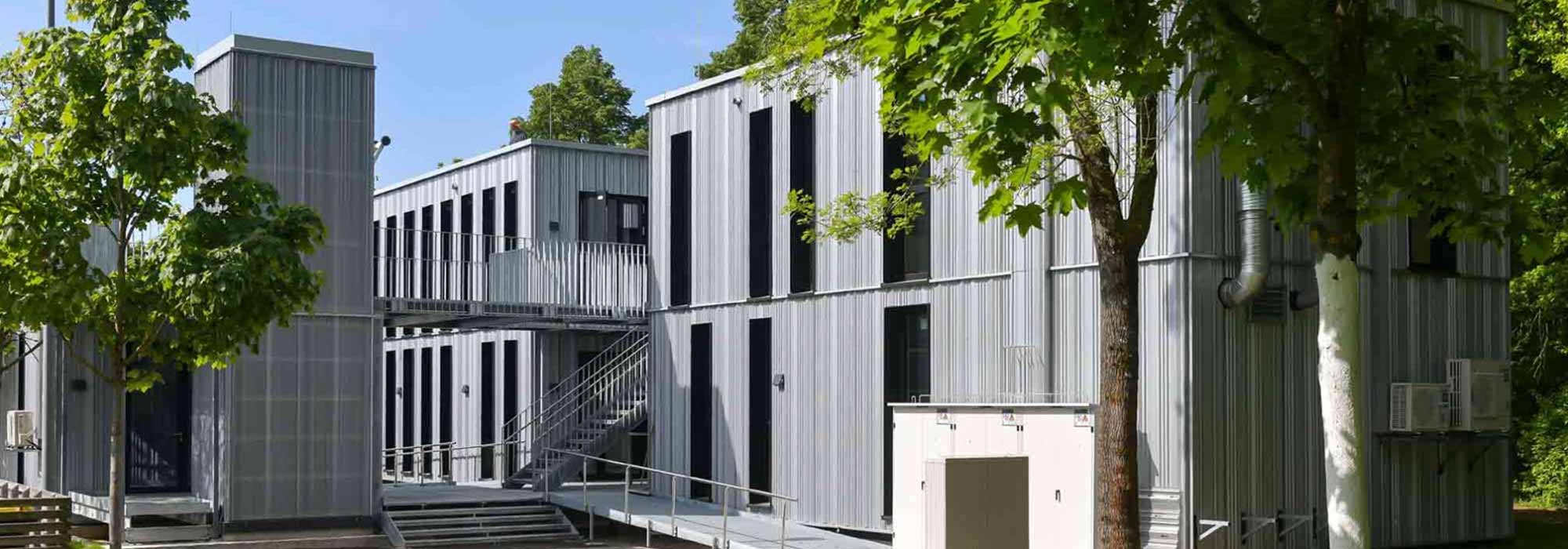
The WAVE-H2 industrial research platform consists of two sites: the campus in Freudenstadt, where solutions can be tested at an industrial scale, and the Campus Vaihingen, which has now officially begun operations. Covering around 250 square meters, the new facility provides space for cutting-edge research across the entire hydrogen value chain – from hydrogen production and power-to-X technologies to the development of chemical hydrogen storage systems and fuel cell technologies, as well as decentralized hydrogen use concepts. “We are very pleased to have reached the first major milestone of the project with the commissioning of the innovation modules at the WAVE-H2 Campus Vaihingen, located next to ARENA2036 at Pfaffenwaldring 17,” said Alexander Sauer, overall project lead and Director of the Institute for Energy Efficiency in Production, together with Kai Peter Birke, subproject lead for “Innovation Modules” and Chair of Electrical Energy Storage Systems at the Institute for Photovoltaics. “We would like to extend our sincere thanks not only to the scientists involved, but also to colleagues in administrative departments, without whom a project of this scale would not have been possible.”
“The new hydrogen research infrastructure at Campus Vaihingen marks an important milestone in the strategic development of energy and climate research at the University of Stuttgart,” said Manfred Bischoff, Vice Rector for Research and Sustainable Development. “With the future technologies being developed here, we are helping to support the transformation of industry toward greater sustainability.”
Power-to-X technologies
When renewable energy sources like wind, solar, or hydropower generate more electricity than needed, the surplus can be converted into valuable products. This is where “Power-to-X” comes in – an umbrella term for technologies that transform green electricity into other energy carriers or raw materials. At WAVE-H2, new research pathways are being explored, including the synthesis of methanol and ammonia.
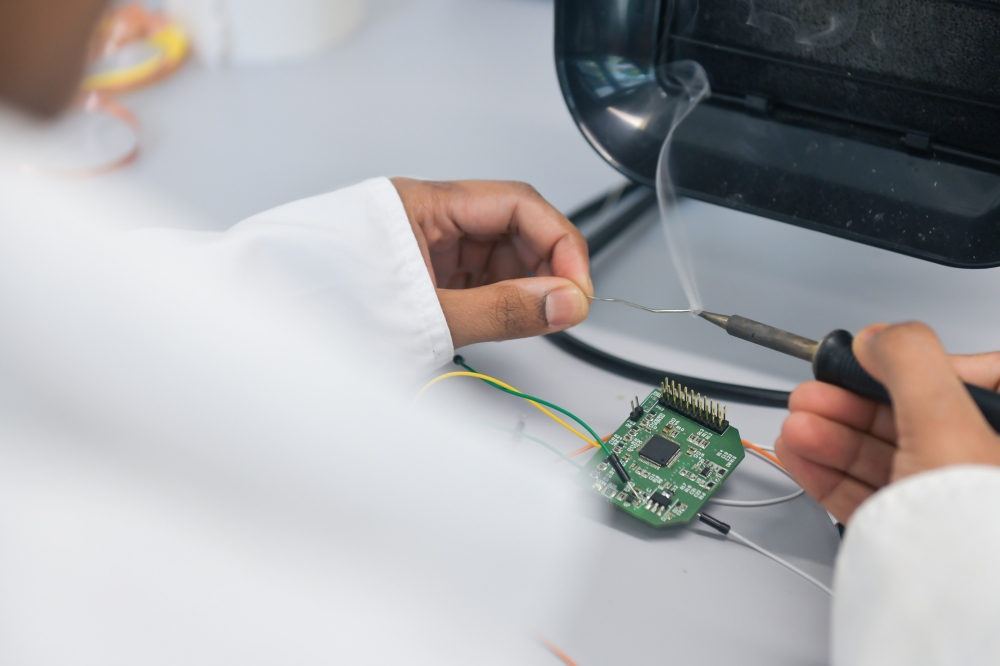
Infrastructure design at the WAVE-H2 Campus Vaihingen
The new laboratory infrastructure is tailored to cutting-edge research in hydrogen systems and electrified processes. The innovation modules at the WAVE-H2 Campus Vaihingen in Stuttgart include fuel cell and electrolysis test facilities for developing and testing new materials. Researchers also have access to electronics workstations for designing control components.
The WAVE-H2 platform enables researchers to collaborate with experts from across all areas of energy research to tackle complex challenges related to hydrogen. “I am very much looking forward to moving beyond the planning and construction phase and fully engaging in research,” says Paul Rößner, Head of the Power-to-X group at the Institute for Photovoltaics (ipv). “Together with colleagues from local networks such as CHEMampere , we will work on electrified, sustainable, and climate-neutral technologies – while also training and mentoring the next generation of engineers and researchers in modern, collaborative lab environments.”
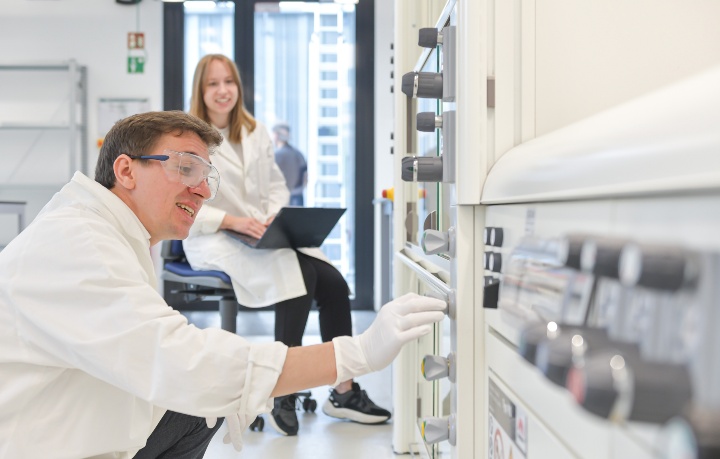
Paul Rößner (ipv) is excited to work with cutting-edge lab equipment.
In his role as Dean of Faculty 5 (Computer Science, Electrical Engineering, and Information Technology), Prof. Birke emphasizes: “With WAVE-H2, we are consistently advancing the Stuttgart approach: interdisciplinary, cross-faculty, and practice-oriented. The WAVE-H2 platform is becoming a central hub for research into pioneering hydrogen technologies for a CO₂-free future – further strengthening the University of Stuttgart as a leading hub for sustainable energy solutions.”
© University of Stuttgart (text: Verena Weber; images: Max Kovalenko)